


Stepping into a CEO role is a profound identity shift. A title alone does not create leadership. You must embody the role before others fully recognize you in it.
According to Diane Gaillard, public speaking coach and leadership communication expert, executive presence is not about dominance. It is about alignment between what you think, what you say, and how you say it.
“The first audience you must convince is yourself,” Diane explains.
Leadership starts internally. How do you enter a room? Do you rush or ground yourself? How do you handle silence? Do you react impulsively or do you choose your response? Leaders who embody their role project clarity and steadiness.
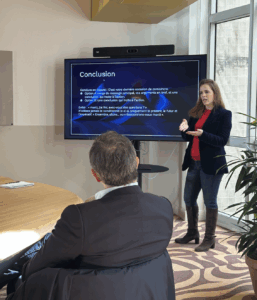
Diane Gaillard, Public Speaking Coach, trains CEOs and business leaders in finance, tech, impact, and more.
Executive presence is non-verbal first
Before you speak, your body already has.
Posture, gestures, breathing, facial expression, and eye contact continuously send signals. A CEO who avoids eye contact, speaks too quickly or hides their hands may project insecurity or defensiveness.
“Slow down. Breathe. Allow strategic silences,” Diane advises.
Silence, when intentional, communicates authority. Stillness conveys confidence. Measured pacing signals control. Your audience will always believe your body before they believe your words and yet, most of us rarely work on our body.
Alignment between verbal and non-verbal communication is essential. Your body must support your message.
Focus on your audience first
Many CEOs prepare what they want to say before reflecting on who they are speaking to. Yet presence is audience-centered.
Who is in front of you? What are their expectations, concerns, personalities, and motivations?
Great CEOs adapt. They adjust tone, vocabulary, rhythm, and level of detail depending on whether they are speaking to employees, investors, clients, or partners. They listen as much as they speak.
Make your speech inclusive
Language shapes connection. When you use pronouns intentionally — “we,” “you,” “us” — you transform a speech into a shared experience vs a monologue.
Instead of stating, “The company will enter a new phase,” try asking: “What kind of company do we want to become?” Rhetorical questions engage reflection. They create dialogue.
An impactful CEO does not speak at people. They speak with them.
Embodiment is a daily practice
You do not wake up one morning feeling like a CEO. Embodiment is a discipline. It requires awareness, feedback, and repetition.
This is where Consultancy32 comes in.
We help leaders embody their CEO role by mastering verbal and non-verbal communication, strengthening executive presence, and managing energy with intention.
Because leadership is not about having the title.
It is about inhabiting it.