
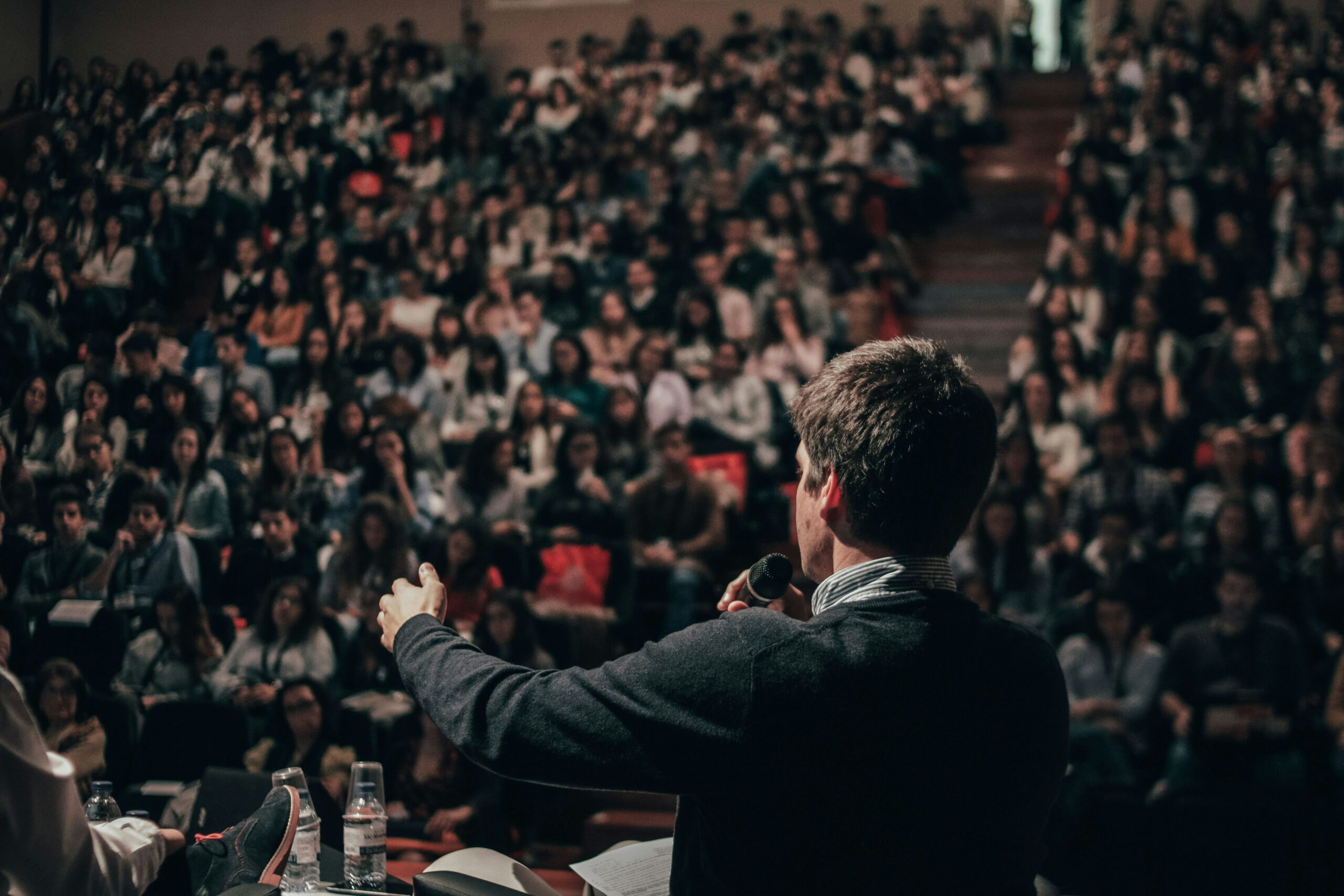
Your words are a powerful thing in the room. Your body also is. Thus, you should care about what you say and about what you project.
In every boardroom, every keynote, every difficult conversation — something happens before the first sentence lands. People read the room. They read you. Your posture, your stillness, the way you hold eye contact or don’t. All of it transmits a signal that the rational mind can’t fully override.
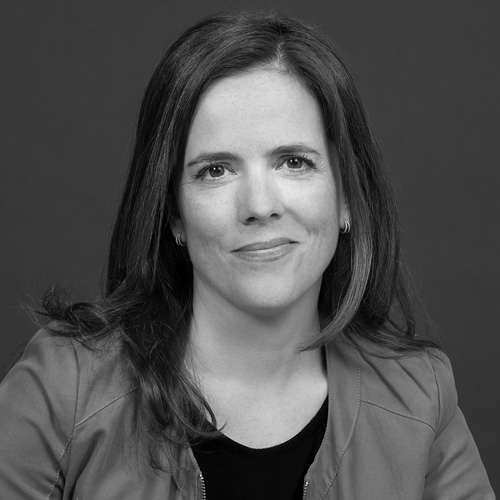
In a precise description of how authority, trust, and credibility are actually transmitted, Diane Gaillard, Co-Founder of Consultancy32, shares: “People forget words. They remember feelings. Leadership starts with your body language because it shapes the impression you leave on others.”
The leadership gap no one talks about
There is a particular kind of executive frustration that rarely surfaces in performance reviews. A leader who is analytically sharp, strategically sound, and deeply knowledgeable. But whose ideas don’t carry, whose presence doesn’t hold. And no one can quite explain why.
The explanation, more often than not, is non-verbal.
Research from Albert Mehrabian, frequently cited in communication studies, suggested that when it comes to conveying attitudes and emotions, body language and vocal tone account for the vast majority of the impression received.
More recent neuroscience has reinforced the point: the human brain processes visual and physical cues faster than language itself, and those cues trigger emotional responses that colour everything that follows.
A leader who walks into a room with contracted posture, avoided eye contact, or nervous physical energy might not only appear uncertain but might also make others feel uncertain.
What executive presence actually means
“Executive presence” has become one of those corporate phrases that gets used constantly and defined rarely. It is often conflated with charisma, which makes it seem innate: something you either have or you don’t.
But that is a mistake.
As Diane Gaillard explains, executive presence is a set of learnable physical and communicative behaviours that signal authority, composure, and intentionality. It is the ability to command attention without demanding it. To reassure without over-explaining. To project conviction even under pressure.
Some of the most studied examples are instructive not because they involve exceptional individuals, but because the behaviours are so visible and so replicable:
- Nelson Mandela’s physical stillness — observed repeatedly by those who met him — conveyed absolute composure without a word spoken.
- Angela Merkel’s deliberate use of measured gesture and neutral expression became a studied element of how she projected stability across two decades of European leadership.
- Steve Jobs on stage — rehearsed obsessively not just his words but his movement, his pauses, his silences. The theatrical dimension of his keynotes was a communication strategy, not a personality trait.
In each case, the impression people carry is not primarily cognitive. It is visceral. It is felt.
The cost of overlooking the physical dimension of leadership
Most leadership development programmes address messaging, storytelling, and strategic communication. Far fewer address what happens in the body when pressure rises — the micro-expressions, the postural collapses, the voice that flattens under stress.
But those are precisely the moments when people are watching most closely.
A CEO who visibly tenses during a difficult analyst question signals something no prepared answer can fully correct. A foundation director whose energy deflates halfway through a donor presentation has already communicated something their slides didn’t intend. A leader who avoids eye contact in a crisis briefing plants doubt before the facts are even delivered.
These are not minor details. In high-stakes contexts — fundraising, media appearances, board presentations, or sensitive internal communications — the physical dimension of leadership is not background noise. It is the signal.
Presence is a practice, not a trait we’re born with
The encouraging truth is that executive presence can be developed. Not through performance coaching that turns leaders into actors, but through the kind of deliberate, structured work that builds authentic physical awareness and expressive range.
The leaders who invest in this work don’t become someone else. They become a more intentional, more composed version of themselves — one whose external presence finally matches their internal authority.
That alignment, as Diane Gaillard’s words remind us, is where leadership really begins. Not in the preparation of better arguments, but in the cultivation of a physical presence that makes people feel something — safety, confidence, direction — before a single word is spoken.
* * *
Consultancy32 works with business leaders, CEOs, and foundation directors to develop the executive presence that most leadership programmes overlook. From one-to-one coaching to group workshops, our consultants help leaders align how they communicate with who they are — because the impression you leave is often the most strategic asset you have. Visit: https://consultancy32.com/our-academy/